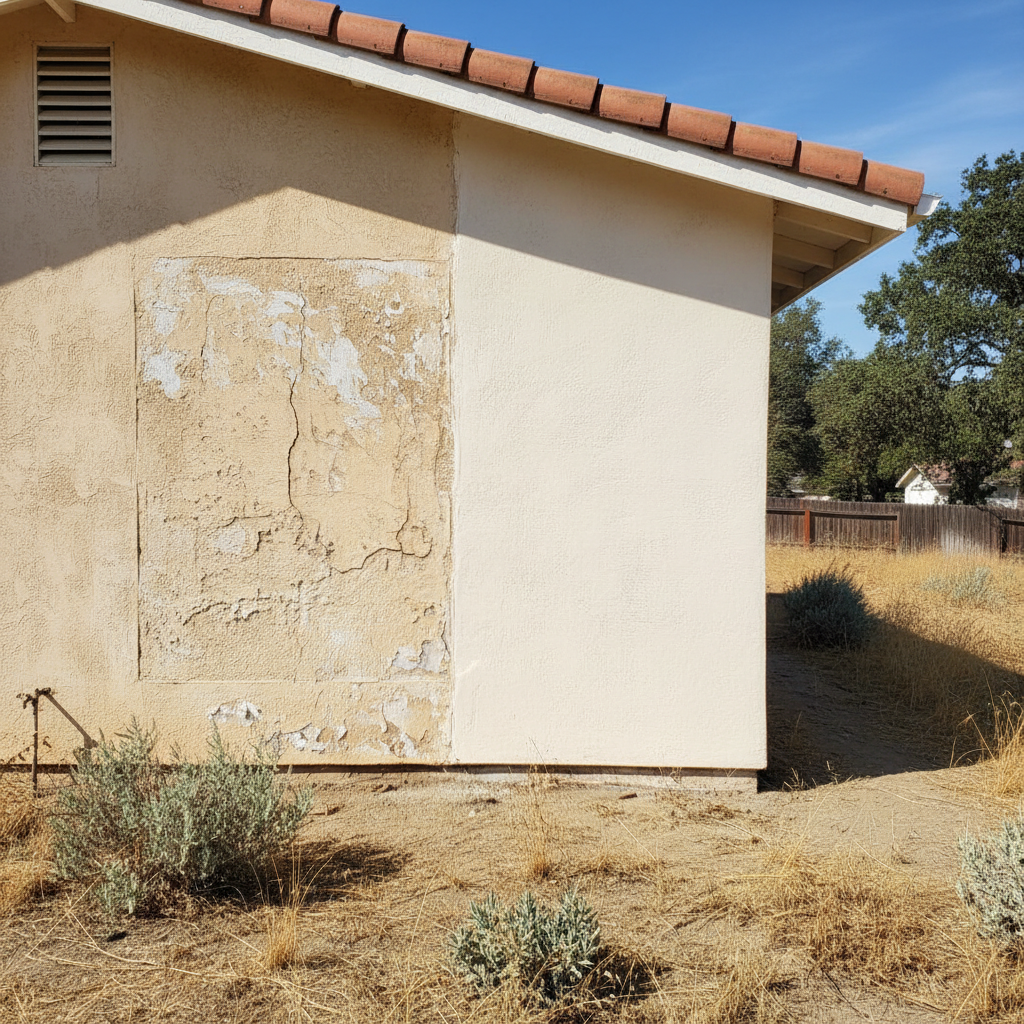
Alright, Tracy homeowners, let's talk about replacing your stucco. If you're reading this, chances are you're dealing with some serious stucco problems – more than just a few small cracks. It's probably telling you that it's time for a bigger fix, right? When your stucco starts to fail, you basically have two main ways to replace it: either a full tear-off, going all the way down to the sheathing, or a stucco overlay (sometimes people call it re-stuccoing over the old stuff). I see homeowners grapple with this choice constantly, and it’s a really big deal for both your home’s strength and your bank account.
Now, I’m not here to push one option over the other without giving you all the facts. My job at Skyline Stucco Tracy is to lay it all out for you, straight up, so you can pick what’s best for your property. Let’s honestly break down these two choices. We’ll consider what really matters: how much it costs, how long it lasts, what kind of upkeep it needs, and how well it’ll hold up right here in our Central Valley heat and those occasional heavy rains.
Option 1: Tearing Off All the Old Stucco and Putting Up New
This is pretty much what it sounds like: we take everything off. Every single piece of old stucco comes down, exposing the sheathing and framing underneath. It’s a completely fresh start.
Cost
Let's be real: a full tear-off usually costs more upfront. You’re paying for the demolition work, getting rid of all that debris, and then installing a whole new stucco system. That means new lath, scratch coat, brown coat, and the finish coat too. It takes more hands-on work and more time, which naturally pushes the price up. Think of it like rebuilding your home's exterior from the ground up.
Durability & How Long It Lasts
This is where tearing it all off really shines. When we strip everything away, we get to inspect the entire wall system. We can check for any hidden water damage, dry rot in the sheathing, or even issues with the framing that might have been hiding under the old stucco. We fix any problems before the new stucco goes on. This approach means your new stucco system is built on a rock-solid foundation, and it’s designed to last 50 to 80+ years, assuming you keep it up properly. It’s truly the best way to get long-term protection and, frankly, peace of mind.
Maintenance
Once it’s put in correctly, a full, traditional stucco system doesn't need much looking after. You’ll want to watch for cracks, especially with our expansive clay soils here in places like the Jefferson School District, which can cause foundation movement. But generally, it’s a tough system that can handle Tracy’s swinging temperatures and direct sun.
Appearance
You end up with a perfectly uniform, brand-new look. We can apply any traditional stucco finish you want, from a smooth Santa Barbara style to a more textured lace finish. It’s a complete aesthetic reset for your home, boosting its curb appeal and value quite a bit.
Option 2: Stucco Overlay (Putting New Stucco Over Existing Stucco)
An overlay means we put a new layer of stucco right over your old stucco. Sounds easier, right? It can be, but there are some really important conditions.
Cost
Typically, an overlay costs less than a full tear-off because you save on demolition and some of the prep work. But don't think it's just a matter of slapping on a new coat. There's still a lot of preparation involved to make sure the new layer sticks correctly.
Durability & How Long It Lasts
This is the trickiest part, honestly. An overlay’s durability totally depends on how good the existing stucco is. If the old stucco is peeling everywhere, has major moisture issues, or is just crumbling, an overlay won't fix those deeper problems. The new stucco will only be as strong as what it’s attached to. Now, if the existing stucco is solid, unpainted, and porous, we can often get it ready with aggressive pressure washing and a bonding agent. But if it’s painted, you absolutely cannot just stucco over it; the paint has to be sandblasted off to expose the raw aggregate, or the new stucco will just peel off with the old paint. That adds cost and complexity. You also need to remember that adding a new layer makes the wall thicker, which can affect window and door trim, and you have to make sure weep screeds aren't accidentally buried.
Maintenance
Upkeep will be similar to a new stucco system, but again, how well it performs long-term is tied to how stable that original layer is. If the old stucco starts to fail underneath, you'll definitely see problems with the new layer too.
Appearance
You can get a fresh, new look and texture, much like a full re-stucco. However, the existing stucco’s texture might influence the final finish, and you might not get quite the same sharp lines around openings if the wall thickness changes significantly.
My Recommendation for Tracy Homeowners
Look, I've worked on enough homes around Tracy, from the older places near downtown to the newer builds in Elissagaray Ranch, to tell you this: for most stucco replacement situations, a full tear-off and re-stucco is simply the better long-term solution.
Why? Because of our climate and the common issues we see here. Tracy gets scorching summers, and while we don't get constant rain, when it does come, it can be really heavy. These conditions, plus the natural ground movement in our area, put a lot of stress on stucco. If your stucco has gotten so bad it needs replacing, there’s a good chance there are underlying problems—like water getting in, damaged sheathing, or the house shifting—that an overlay just won't fix.
A full tear-off lets us see the actual bones of your house, fix any hidden issues, and install a complete, modern stucco system with proper weather barriers and flashing. It’s an investment, absolutely, but it’s an investment in your home’s structural integrity, how energy-efficient it is, and its lasting curb appeal. You’re not just putting a band-aid on it; you’re truly fixing it for the next few decades.
While an overlay *can* be an option if the existing stucco is in remarkably good, unpainted shape, I rarely recommend it for a *full replacement* situation. It’s usually better for things like redashing or minor resurfacing when the existing system is fundamentally sound. For true replacement, you really want that fresh start.
Don't just take my word for it. If you’re facing this decision, give Skyline Stucco Tracy a call. We’ll come out, honestly assess your situation, and walk you through what makes the most sense for your home, your budget, and our unique Tracy conditions.